The New HST Rebate on New Homes — What It Actually Means
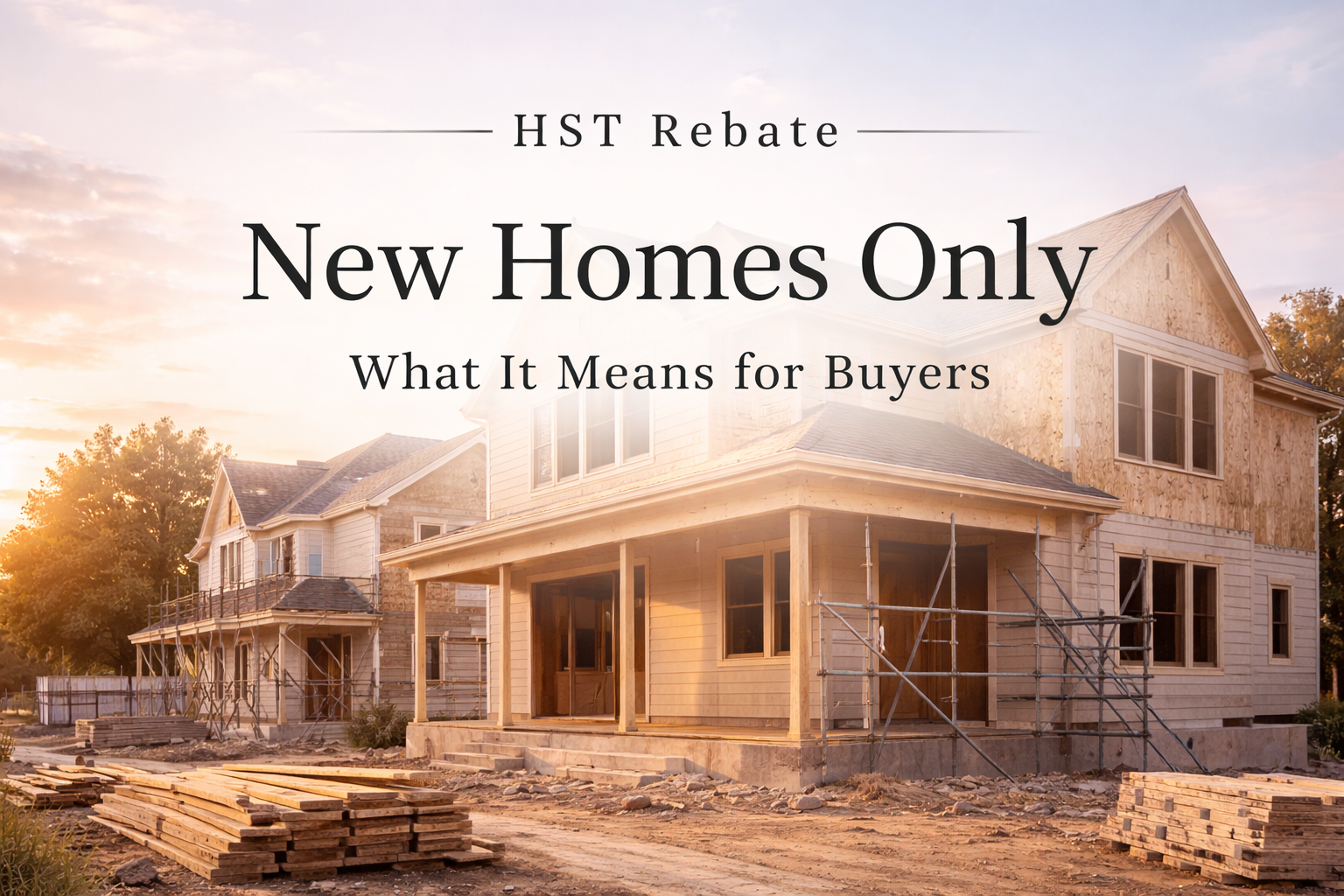
The new HST rebate on new homes in Ontario has created a lot of confusion, particularly around who it actually applies to.
Some headlines make it sound like this is a broad tax break for anyone purchasing a home. In reality, it’s much more specific than that.
This rebate applies only to newly built homes, and that distinction is where most of the misunderstanding is coming from. The majority of buyers in Toronto are purchasing resale properties, and for those transactions, this rebate doesn’t apply at all.
So before getting into the details, it’s important to frame this properly: this is not a blanket affordability measure across the entire housing market — it’s a targeted incentive aimed at new construction.
What This Rebate Actually Is
At a high level, the Ontario and Federal governments have expanded the HST rebate on new homes to help reduce the upfront cost of buying directly from a builder.
When you purchase a newly built home, HST is typically included in the purchase price. This rebate allows eligible buyers to recover a portion — and in some cases all — of that tax.
Under the updated structure, buyers may be eligible for a rebate of up to $130,000, which represents the full HST on a $1 million home. While that number sounds significant, it’s important to understand that it only applies within very specific price ranges and conditions.
What Actually Counts as a “New Build”
This is where most of the confusion is happening, and it’s worth slowing down here.
A “new build” doesn’t just mean a home that looks new — it refers to how the property is being purchased and whether it has ever been occupied.
In most cases, this includes homes that are purchased directly from a builder, either as a pre-construction purchase or a newly completed home that has never been lived in. It can also include situations where a buyer is building a home themselves or purchasing within certain co-operative housing structures.
What it does not include are resale homes — even if they’ve been recently renovated or updated. If someone has already lived in the property, it falls outside of this program.
That distinction is critical, because it means this rebate does not apply to the majority of transactions happening in the Toronto market.
Who This Applies To
Eligibility is fairly straightforward, but still important to understand.
To qualify, buyers must be at least 18 years old, be a Canadian citizen or permanent resident, and intend to use the home as their primary residence.
There is also a separate set of rules for first-time homebuyers, which are more restrictive. In those cases, buyers cannot have owned a home — anywhere in the world — that they or their partner lived in within the past four years.
These requirements are in place to ensure the rebate is being used for end-users, rather than speculative or purely investment-driven purchases.
How the Rebate Actually Works
Part of what makes this program feel confusing is that there isn’t just one rebate — there are effectively two overlapping structures.
For all buyers, the expanded rebate allows for up to $130,000 in HST recovery on homes valued up to $1.5 million, with a gradual reduction beyond that range. This version is tied to a fairly tight purchase window, requiring agreements to be signed between April 2026 and March 2027.
For first-time buyers, there is a separate structure that provides a full rebate on homes up to $1 million, with reduced amounts up to $1.5 million and no rebate beyond that point. This version runs on a longer timeline, extending through to the end of 2030.
While the details can get technical, the key takeaway is that eligibility, timing, and price all play a role in how much — if any — rebate a buyer actually receives.
What This Means in Practice
In practical terms, this rebate doesn’t change the overall housing market — but it does make new construction more attractive within a specific segment.
For buyers already considering a pre-construction purchase, or those looking at newly built homes, this can represent a meaningful reduction in upfront cost. It may also help bring some additional demand into the new-build space over time.
For resale buyers, however, nothing changes. Pricing, competition, and negotiation in the resale market will continue to be driven by supply, demand, and broader economic conditions — not this rebate.
Final Thoughts
A lot of the conversation around this rebate has been shaped by simplified headlines, which is where much of the confusion is coming from.
It’s easy to interpret this as a broad tax break for homebuyers or something that will immediately impact housing prices across the board. In reality, it’s much more targeted than that.
This is a policy designed to support new construction — not the resale market. It applies only to a specific type of purchase, under specific conditions, and within defined timelines. For buyers already considering a newly built home, it can be a meaningful incentive that helps reduce upfront costs and makes certain projects more appealing.
For everyone else, the impact is limited. Resale pricing, competition, and overall market conditions will continue to be driven by supply, demand, and broader economic factors — not this rebate.
That doesn’t make the policy insignificant, but it does mean it needs to be understood in the right context.
As with most changes in real estate policy, the details matter. And in this case, the most important takeaway is also the simplest:
This rebate applies to new construction — not the overall housing market.
Note:This is a general overview of the current HST rebate rules and is not intended as legal or tax advice. For guidance specific to your situation, it’s always best to speak with a qualified professional.
See post on Bill 60 here

Need Advice? I’m Here to Help.
If you’re curious about how things are moving in your specific area — or you just want to talk strategy — feel free to reach out anytime. Whether you're ready to jump in or just gathering info, I'm happy to help you make sense of the market.